Digital Wallet App Development: Architecture and Licensing
Worldpay’s 2026 Global Payments Report found that digital wallets accounted for 56% of global e-commerce value and 33% of point-of-sale value in 2025. Building one is less about screens than about three early decisions: what the wallet holds, which license that requires, and how card data is protected. This guide, part of our guide to fintech app development cost, covers those decisions and the architecture that follows from them.
Quick answer
A digital wallet is a ledger, a payment layer, and a compliance system behind one screen. Choose the wallet model first, because it sets the license: a stored-value wallet holds customer funds and needs a regulated issuer, while a pass-through wallet holds tokens, not balances. The architecture and the rules both follow from that choice.
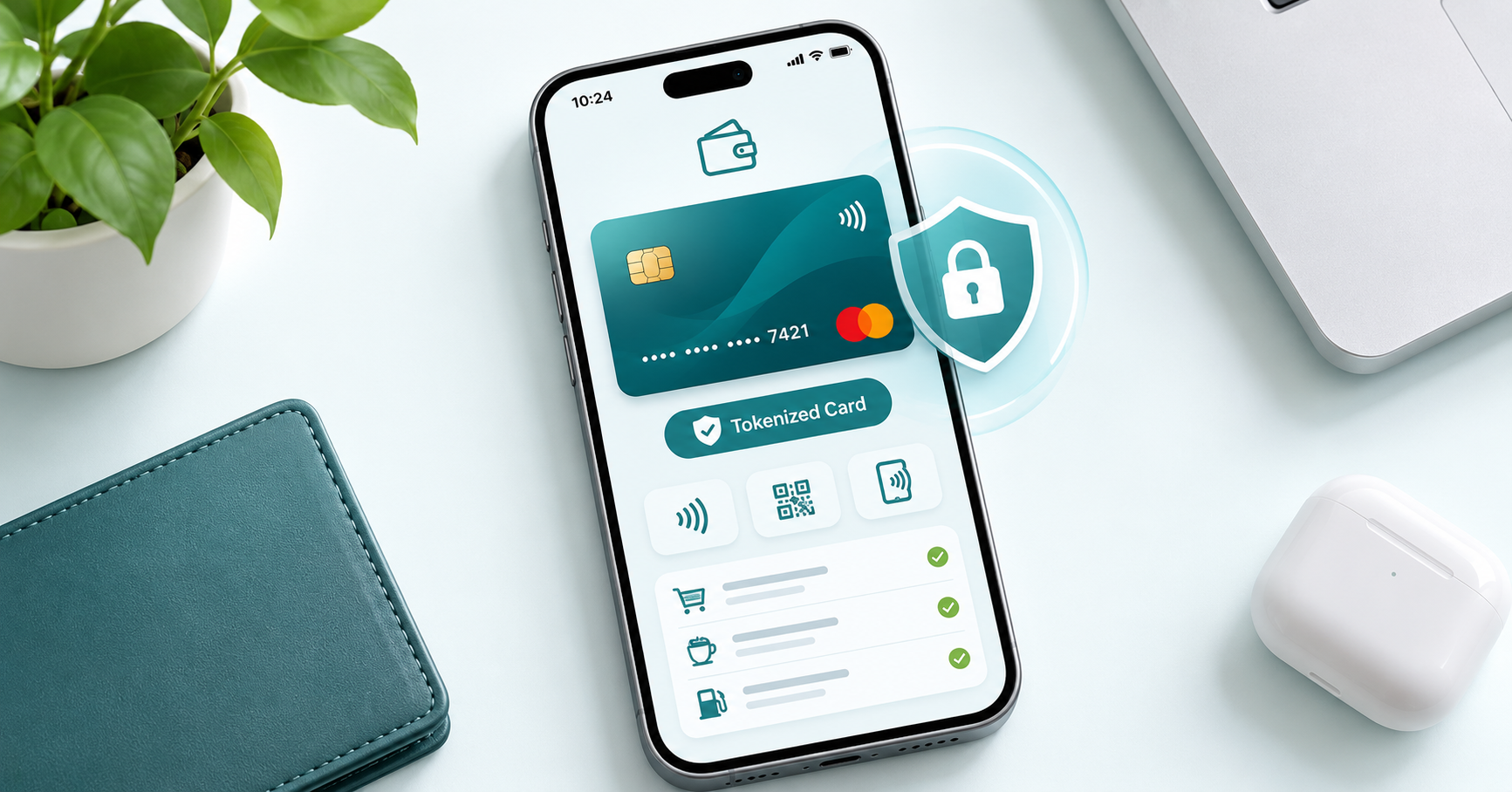
A digital wallet is a ledger, a payment layer, and a compliance system behind one screen
1. What Kind of Digital Wallet Are You Building?
A digital wallet can hold money, hold card tokens, or hold crypto keys, and each model carries different duties. A stored-value wallet keeps a balance you owe the customer. A pass-through wallet stores tokenized cards and moves no balance. A crypto wallet controls keys. Decide which one you are building before you design a screen.
| Model | What it holds | Examples | Main regulatory question |
| Stored-value wallet | A balance owed to the customer, funded by bank transfer, card, or cash-in | E-money wallets and super-app wallets | Does holding or moving customer funds need e-money or money transmitter authorization? |
| Pass-through wallet | Tokens that stand in for existing cards; no balance | Mobile wallets such as Google Wallet and Apple Pay | Card network, issuer, and device security rules; with no balance held, e-money rules typically do not apply |
| Custodial crypto wallet | Crypto-assets, with the provider controlling the keys | Exchange and broker wallets | Is this custody under crypto-asset rules such as MiCA? |
| Non-custodial crypto wallet | Nothing of the user’s; the user holds the keys and the provider supplies software | Self-custody wallet apps | Who actually controls the keys, and what other services does the app add? |
This guide skips the feature list and the budget on purpose. Our e-wallet app development guide covers features and the build process, and our e-wallet app development cost article covers pricing.
Founders often ask whether to build their own wallet or rely on Google Wallet. A pass-through wallet lets customers pay with the cards already on their phone. Your own stored-value wallet gives you a balance, your own funding and payout rails, and your own regulatory duties. Most products need the first as a payment option, and the second only if they must hold funds.
2. What Architecture Does a Digital Wallet Need?
A stored-value wallet has seven building blocks: onboarding and identity checks, a wallet ledger, funding and payout rails, payment initiation, tokenization and device binding, fraud and AML monitoring, and reconciliation. Design the ledger and the reconciliation first, because they prove that every balance in the app matches money held at the bank.
Onboarding and identity
Collects identity data, verifies it, and sets account limits by risk.
⚠ Store the verification level on the account so limits can change without a release
Wallet ledger
Double-entry record of balances, holds, fees, and reversals.
⚠ Append entries instead of updating a balance in place, so history stays auditable
Funding and payout
Cash-in and cash-out by bank transfer, card, or agent.
⚠ Each rail has its own timing and failure modes, so model pending and failed states
Payment initiation
P2P transfers, QR, NFC, and merchant checkout.
⚠ Make requests idempotent so a retried tap or webhook cannot pay twice
Tokenization and device binding
Replaces card numbers with tokens and ties credentials to a device.
⚠ See section 2.1 below for detail
Fraud and AML monitoring
Rules and scoring on transactions; suspicious activity reporting.
⚠ Keep rules configurable by market and log every alert and decision
Reconciliation and reporting
Compares the ledger with bank and safeguarding accounts every day.
⚠ UK daily reconciliation and Vietnam’s reserve rule both depend on it (see section 3)
How Does Tokenization Protect Card Data?
Tokenization replaces the card number, called the PAN, with a substitute value that is limited in where and how it can be used. A wallet app then stores and sends the token, not the card number, so a breach of the app or a merchant exposes a value that is much less useful to a thief.
EMVCo, the body that publishes the specifications, says tokens can be tied to a specific device, merchant, or use case through domain restriction controls. If a phone is lost, the token can be deleted and a new one issued to a replacement device without changing the card number. If the card number changes, tokens saved with merchants can be linked to the new number without cardholder action.
A wallet app does not issue network tokens by itself. It integrates with a token service provider, usually through an issuer, a processor, or the wallet platform, so scope that integration early because it affects launch dates.

Tokenization replaces the card number with a token limited to a specific device, merchant, or use case
3. Which Licenses and Rules Apply?
Licensing depends on whether you hold customer money. If you do, expect an e-money or money transmitter authorization, safeguarding duties, and anti-money-laundering controls in every market. The rules differ by country and several changed recently, including the UK safeguarding regime from May 7, 2026 and Vietnam’s Decree 52/2024.
| Market | Status | What the software must support |
| UK | Stored value is issued by FCA-authorized payment institutions and e-money institutions. The FCA’s supplementary safeguarding regime (PS25/12) is in force from May 7, 2026. | Daily internal and external reconciliation; a resolution pack retrievable within 48 hours; an annual safeguarding audit (smaller firms are exempt); a monthly safeguarding return to the FCA |
| EU | E-money is issued by credit institutions or authorized e-money institutions under the E-Money Directive (2009/110/EC). | Initial capital of at least €350,000; own funds of 2% of average outstanding e-money; safeguarding of customer funds; redemption at par on request |
| US | No single wallet license. Non-bank wallets that hold or move funds register with FinCEN as money services businesses and generally need a money transmitter license in each state. Congress voided the CFPB’s rule on large digital payment apps in May 2025. | A risk-based AML program: customer diligence, sanctions screening, transaction monitoring, and suspicious activity reporting; state-by-state limits and disclosures as configuration |
| Vietnam | Decree 52/2024/ND-CP, effective July 1, 2024, replaced Decree 101/2012. Banks and intermediary payment service providers may offer e-wallets. An IPS provider needs an SBV license, minimum charter capital of VND 50 billion, and information security level 3. | E-wallets linked to a payment account or debit card; funds held at least equal to the combined balances of all wallets; reporting of suspicious transactions |
Plan for time as well as cost. One 2026 US law-firm guide says multi-state licensing has no fixed timeline, that California and New York have traditionally taken up to a year or longer, and that a de novo bank charter takes longer still. Many early-stage wallets therefore launch through a licensed partner while their own applications are pending.
Treat limits, fees, verification levels, and reporting as configuration by market. Vietnam’s decree also points to further State Bank circulars, so the rules there may keep changing.
What Changes for a Crypto Wallet?
For crypto wallets the legal test is control. Under the EU’s MiCA regulation, custody means safekeeping or controlling crypto-assets, or the means of access to them, on behalf of clients. If your service holds the keys, expect custody rules. If users hold the keys, check what other services your app adds.
Key management is therefore the first architecture choice for a crypto wallet: where keys are generated, how they are backed up, and who can sign. Have counsel review the full MiCA text and national rules. This article does not cover US or Asian crypto licensing.
4. What Security Controls Does a Wallet Need?
A wallet app is a target because it connects identity, money, and a phone. Security works in four layers: the device, the credentials, the transaction, and the ledger. Build each layer so that a failure in one does not move money, and keep an audit trail that lets you reconstruct who did what.
- Device. Bind credentials to the device, require a biometric or PIN confirmation for payments, and revoke the tokens of a lost device.
- Credentials. Store tokens rather than card numbers, and limit who can read identity documents.
- Transaction. Use idempotent requests, velocity limits, and step-up authentication for large or unusual transfers.
- Ledger. Keep append-only entries, reconcile daily, and alert on unmatched differences.
- Monitoring. Vietnamese guidance on Decree 52/2024 lists patterns that wallet providers should report as suspicious: rapid deposits and withdrawals, large daily activity with near-zero balances, frequent small deposits followed by large transfers, and sudden large deposits. Build rules for patterns like these from the start.
5. What Does Savvycom’s Wallet and Payments Work Show?
Savvycom’s Company Profile lists a digital payment and merchant wallet platform built for a banking technology client over a two-year partnership. The profile reports development delivered 30% faster and operating costs reduced by 60%. The public portfolio does not describe the project’s architecture or scope, so treat it as context, not proof of the designs above.
The foreign exchange assistant Savvycom built for a South Korean financial services company shows controls that carry over to wallets: trades tied to a locked quote, role-based access, and automatic logging of every transaction. In a wallet, the same pattern ties a payment to the amount and fee the user approved and records who changed a ledger entry. It went live in three months. Read the multi-agent FX project for details.
Neither project is a licensed stored-value wallet in a named market, and the public pages do not describe licensing work. Licensing stays with you and your counsel. A development partner builds the system to meet the rules and produces the audit trails and reports that support your application.
6. What Should You Ask a Wallet Development Partner?
Ask a development partner to show wallet or payments work, not only mobile apps in general. A useful partner can explain how it separates the ledger from the app, handles pending and failed transfers, keeps rules configurable by market, and supports your license application with audit trails, reconciliation reports, and clear data flows.
- Wallet model. Which model have they built: stored value, pass-through, or crypto?
- Ledger. How do they record reversals, holds, and failed payouts without editing history?
- Licensing support. What reports and audit trails can they produce for a regulator or sponsor bank?
- Integrations. Which banks, card networks, and token services have they connected to, and who owns each integration after launch?
- Operations. Who monitors reconciliation breaks, fraud alerts, and regulatory changes after launch?