8 Ways Technology Has Transformed Transportation And Logistics
When Savvycom’s team automated container tracking for a global logistics operator handling 400 to 500 container movements a day, search-and-retrieval time dropped by 60%. That is what technology in transportation and logistics looks like in 2026: not incremental upgrades, but operational math changing in production yards, fleets, and warehouses.
Eight technologies are doing most of that work: GPS and real-time tracking, drones, blockchain, IoT, electric vehicles, AI and machine learning, e-commerce integration, and mobile applications. This guide covers each one with what it actually changes on the ground, including results from deployments Savvycom has shipped.
| Technology | What it changes |
|---|---|
| GPS & real-time tracking | Fleet visibility, route changes on live traffic, yard automation |
| Drones & UAVs | Last-mile reach into areas roads serve poorly |
| Blockchain | Tamper-proof provenance from origin to destination |
| IoT & smart technology | Condition monitoring for sensitive cargo, RFID inventory speed |
| Electric vehicles | Lower emissions and fuel costs across fleets |
| AI & machine learning | Forecasting, route optimization, document automation |
| E-commerce integration | Orders flowing straight to fulfillment without manual entry |
| Mobile applications | Freight operations managed from a phone |
1. GPS and real-time tracking
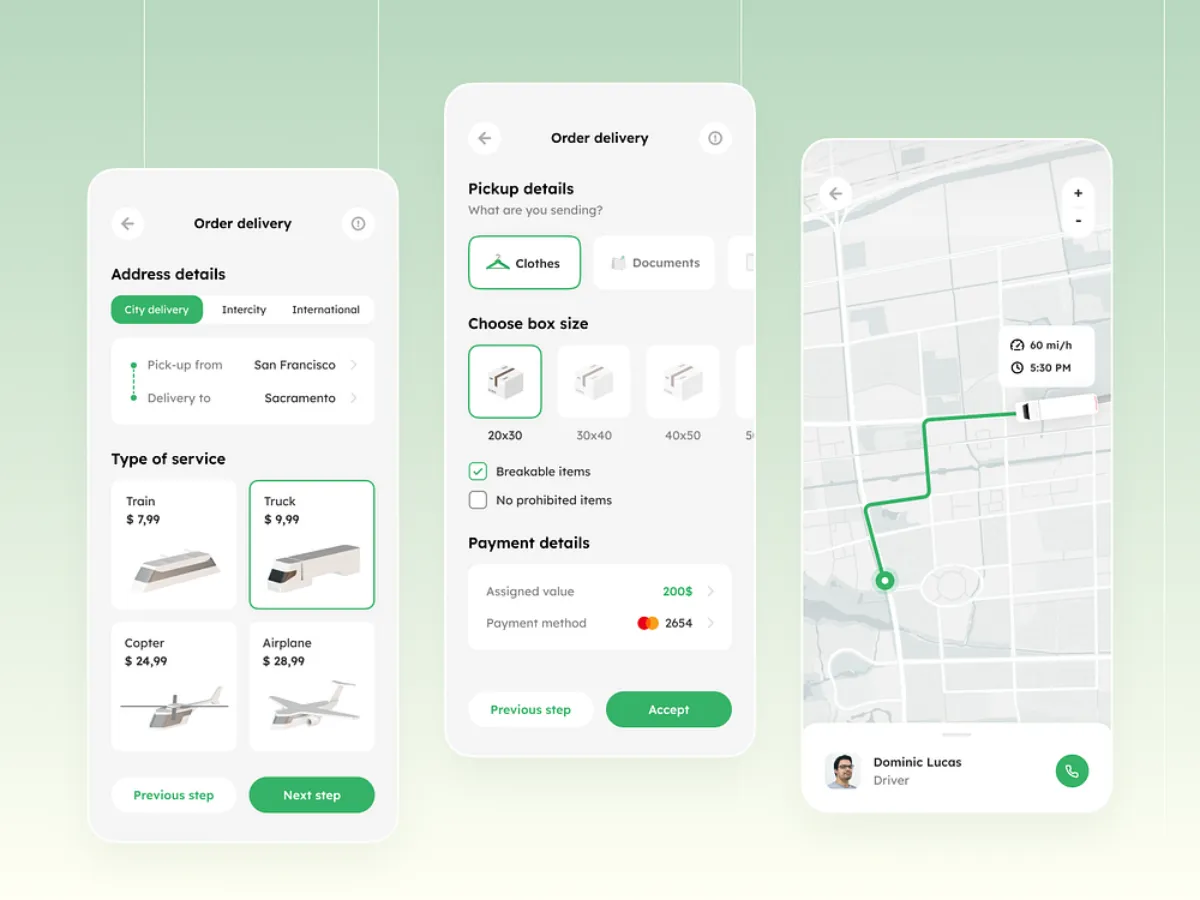
GPS plus telematics turned fleet management from end-of-day reports into a live map: vehicle location, driver behavior, fuel burn, and maintenance signals in real time, with routes adjusted against live traffic instead of yesterday’s plan. The maintenance angle is the quiet money-saver: engine diagnostics streamed from the vehicle let operators service trucks on condition rather than on schedule, catching failures before they strand a load and cutting the padding built into fixed maintenance calendars.
The same real-time principle now extends beyond vehicles to the facilities between them. In the yard management system Savvycom built for a global logistics operator handling 400 to 500 container movements a day, the tracking layer is entirely visual: AI cameras at entry and exit points read container IDs, trailer IDs, and truck license plates automatically, object detection follows each container as it moves across the yard, and a 2D digital map shows the live position and status of every unit on site. Even placement instructions run through the system, with move orders validated against camera evidence so a container cannot be silently dropped in the wrong slot.
The before-and-after explains why this matters. Previously, yard records were manual: staff logged movements on paper or spreadsheets, records drifted from reality within hours, and finding a specific container meant physically searching rows. After deployment, container search time fell 60% and overall yard throughput rose 35 to 40%, measured against those manual records. Tracking the goods is half the story; the other half is aggregating those signals into one operational picture, which is what supply chain visualization platforms do.
2. Drones and UAVs
Drones opened a delivery lane that trucks cannot serve economically: fast, light, point-to-point delivery into areas with poor road access. The proven use case is medical logistics, with drone networks delivering vaccines and blood supplies to remote clinics in parts of Africa and Asia, where a two-day road trip becomes a thirty-minute flight and cold-chain risk drops accordingly.
The honest caveat: outside those corridors, adoption is slower than the headlines suggested. The binding constraint is regulatory, not technical. Most aviation authorities still restrict flights beyond the operator’s visual line of sight, which is exactly what commercial delivery at scale requires, and approvals are granted corridor by corridor. The practical read for logistics planners in 2026: drones are a real tool for defined high-value routes, medical, offshore, remote industrial sites, and still a pilot program for general urban parcels.
3. Blockchain
Blockchain gives supply chains something they never had: a shared record no single party can quietly edit. Provenance tracking is the practical application, letting a grocery chain trace produce from farm to shelf, or a freight forwarder prove chain of custody across a dozen handoffs.
A decade in, the adoption pattern is clear enough to state plainly. Blockchain succeeded where documents cross many distrustful parties: electronic bills of lading, letters of credit, and food-safety traceability, where regulators or retailers mandate an auditable trail. It failed where a plain shared database would have done the job, and several high-profile consortium platforms shut down after proving exactly that. The decision rule for 2026: if all parties already trust one operator’s records, skip the blockchain; if they demonstrably do not, and the paperwork cost of that distrust is measurable, it earns its complexity.
4. IoT and smart technology
IoT connects vehicles, cargo, and infrastructure into a continuous data stream, and its highest-value application is condition monitoring for cargo that punishes mistakes. A refrigerated container crossing three borders used to be a black box between checkpoints; a smart container reports temperature and humidity continuously, alerts the operator the moment readings drift toward an excursion, and produces the unbroken condition log that pharmaceutical and fresh-food compliance requires. The difference is not just visibility, it is the ability to intervene mid-journey instead of discovering spoiled cargo at the destination.
Inside the warehouse, RFID does the equivalent job for inventory. A barcode needs line of sight and one scan per item; an RFID reader takes bulk reads of entire pallets as they pass a gate. Cycle counts that took a weekend take hours, receiving accuracy stops depending on scanner discipline, and shrinkage becomes visible while it is happening. The pattern across all of it: physical assets that report their own state, feeding the analytics layer everything else in this list depends on.
5. Electric and eco-friendly vehicles
Electric fleets attack two line items at once: emissions targets and fuel costs. Heavy-duty electric trucks are moving from pilots into scheduled routes, and the total-cost math is shifting in their favor: higher purchase price, but lower energy cost per kilometer and fewer moving parts to maintain. The operational catch is that electrification changes routing itself. Charging windows become a scheduling constraint the same way driver hours are, which means fleet software built for diesel assumptions needs rework, not just a new vehicle type in a dropdown.
The ecosystem around the vehicles, charging networks, services, commerce, is becoming its own logistics vertical, and Savvycom works inside it directly. For EVME PLUS, a PTT Group subsidiary operating Thailand’s EV lifestyle platform, we built the data analytics dashboards that turn platform and user-behavior data into business decisions, and augmented their engineering team to accelerate feature delivery across the e-commerce ecosystem connecting EV drivers with products and services.
6. AI and machine learning
AI in logistics has moved past chatbots into the operational core, and it earns its keep in three distinct jobs. Forecasting: demand models trained on order history, seasonality, and market signals decide what inventory sits where before customers order it. Optimization: route engines weigh traffic, delivery windows, vehicle capacity, and fuel to produce plans no dispatcher could compute by hand, and recompute them as conditions change. And increasingly, reading: document AI processes the contracts, manifests, and customs paperwork where logistics actually loses its time.
That third job is the least glamorous and often the fastest payback. A production example from Savvycom’s delivery: a leading South Korean logistics conglomerate was reviewing shipping and service contracts manually, with legal teams as the bottleneck and clause-level risks slipping through under volume pressure. The contract review platform we built runs custom models on Google Cloud’s Vertex AI to read each contract and flag risks and critical clauses, stores the full contract corpus in BigQuery for querying, and plugs into the client’s existing document workflow so lawyers review flagged exceptions instead of everything. It now processes over 1,000 contracts a month, cutting review time by 50% with 95% accuracy in clause identification, measured against the previous manual process. For the broader automation picture in this industry, see RPA in logistics.
7. E-commerce integration
The line between selling and shipping has collapsed. Orders placed on an e-commerce storefront now flow directly into warehouse and carrier systems: automated dispatch, driver assignment, proof of delivery, and customer notifications, with no manual re-entry between systems.
What “integration” actually means in practice is an order management layer acting as a router. It takes each order, decides which warehouse fulfills it based on stock and proximity, pushes picking instructions to the WMS, books the carrier through an API, and keeps inventory counts synchronized across every sales channel so the same unit is never sold twice. Returns run the same pipeline in reverse. The operational payoff is fewer fulfillment errors and delivery promises a business can actually keep, because the promise is generated from live capacity data rather than guesswork, and every step reports status back to the customer automatically.
8. Mobile applications
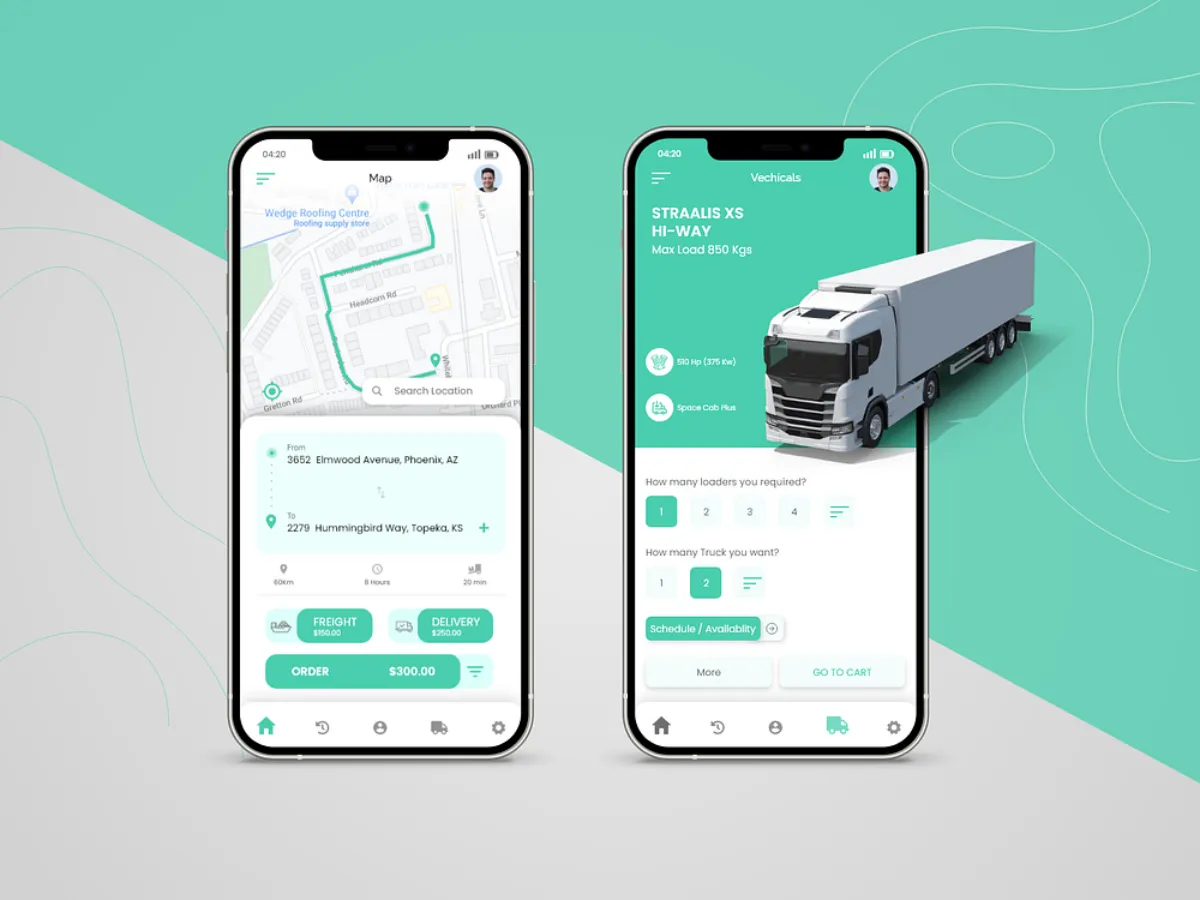
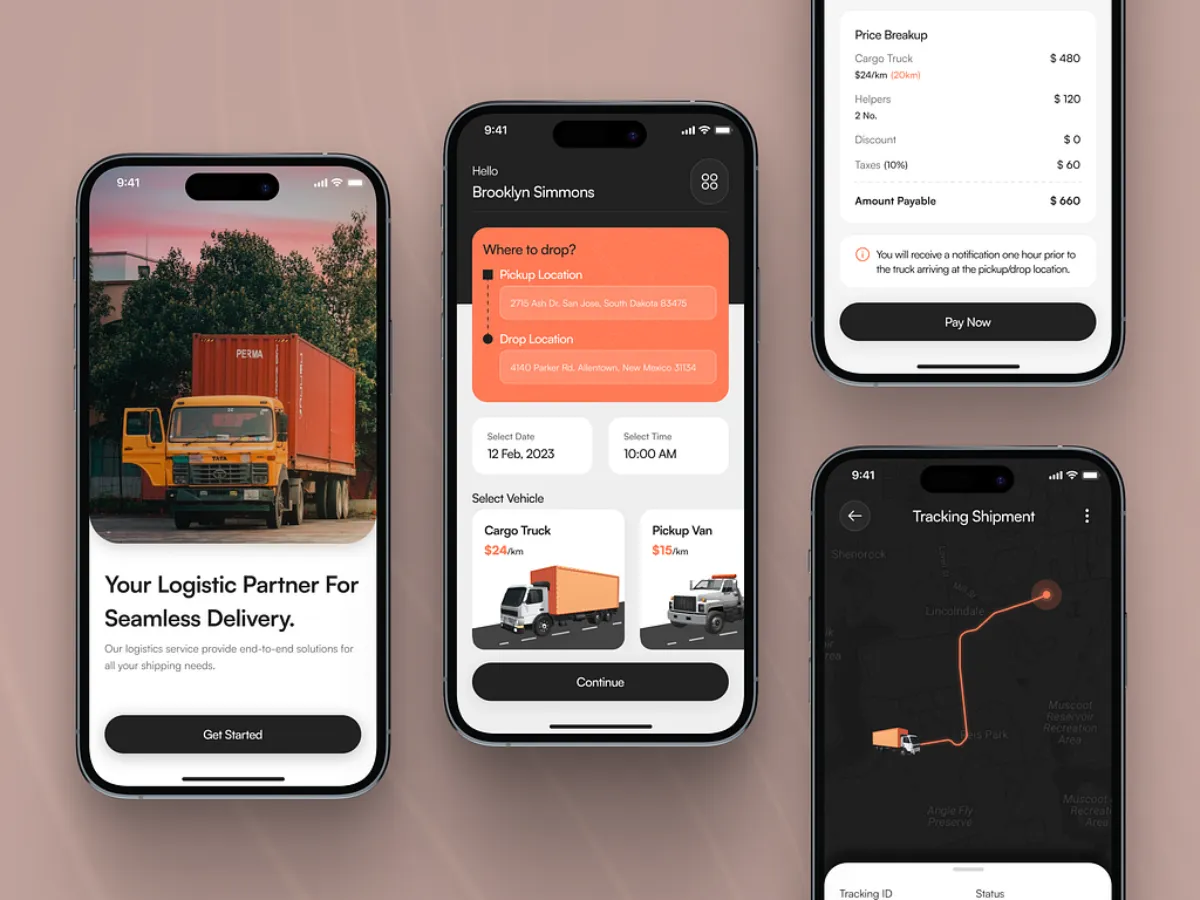
Mobile apps democratized logistics tooling. Freight booking, shipment tracking, delivery scheduling, and customs status now run from a phone, which matters most for the small and mid-size operators that could never afford the desktop enterprise suites.
The mobile layer actually splits into two products with different jobs. The shipper-side app is a visibility and booking tool: quote, book, track, and get exceptions flagged before the customer calls. The driver-side app is the workplace itself: route sequence, navigation, proof-of-delivery capture, incident reporting, and earnings in one screen, and its usability directly moves operational numbers, because a confusing proof-of-delivery flow multiplied across ten thousand daily stops is a measurable cost. Teams evaluating logistics apps should test the driver flow standing in a parking lot, not sitting in a conference room; that is where adoption is won or lost.
How do the eight technologies fit together?
The eight technologies form one architecture with four layers: a sensing layer (GPS, IoT, cameras) that reports what is physically happening, a data layer that streams and stores those signals, an intelligence layer (AI, analytics) that turns them into decisions, and an execution layer (mobile apps, e-commerce integration, EV fleets) that acts on them.
The yard management deployment described in section 1 runs exactly this stack in miniature: cameras sense a container arriving, the event streams through a Kafka pipeline into the database, the vision models identify and track the unit, and the execution layer issues a validated move order to the operator’s screen, all in seconds. Understanding the layers matters for buyers because it explains why bolting one technology onto an operation rarely works: an AI forecasting model is only as good as the IoT and tracking data feeding it, and real-time visibility is worthless if no execution system acts on it. Investment sequencing should follow the stack, sensing and data first, intelligence second, and that is also the order that keeps each phase paying for the next.
What stands between logistics companies and these gains?
Four obstacles decide whether the technologies above deliver value or stall in pilots: upfront investment in systems and skills, data security across connected devices, workforce adaptation as automation spreads, and regulatory compliance that varies by market and technology.
- Investment requirements: new technology needs capital and, harder to buy, people who can run it. The build-vs-buy calculation belongs before the purchase order, not after.
- Data security and privacy: IoT devices and shared ledgers multiply the surface area holding sensitive shipment and customer data, so strict security architecture is a prerequisite, not a patch.
- Employment and skills: automation shifts work rather than simply removing it; the operators winning with these tools are the ones retraining yard and dispatch staff into system operators.
- Regulatory compliance: drones, autonomous vehicles, and cross-border data each carry evolving rules that differ by jurisdiction, which is a permanent workstream, not a one-time checkbox.
The pattern in successful deployments, including the ones described above, is sequencing: fix the data and workflow foundation first, then add the intelligence layer on top. Technology bolted onto broken processes digitizes the brokenness.

How Important Is Technology In Transportation?
Technology has become an indispensable force in the realm of transportation, playing a pivotal role in reshaping processes and driving efficiency.
- Precision and Accuracy
- Efficiency through Automation
- Cost Savings
- Streamlining Communication
- Time Efficiency
- Resource Optimization
- Environmental Impact
What Are The Sustainable Transport Technologies?
The integration of autonomous driving, connected vehicles, electrification, ride-sharing, and mass-transit systems is pivotal for creating a sustainable and efficient urban transportation landscape. Zero-emission vehicles, in particular, play a crucial role in fostering environmentally friendly mobility solutions.
- Autonomous Driving: Optimizing routes and reducing congestion, autonomous vehicles redefine urban mobility, promoting efficiency and sustainability.
- Connected Vehicles: Real-time communication enhances traffic flow, minimizing stops and fuel consumption for a more sustainable transportation network.
- Electrification: Electric vehicles reduce emissions, offering a sustainable alternative to traditional combustion engines and decreasing dependence on fossil fuels.
- Ride-Sharing: Shared vehicle usage decreases traffic and promotes resource efficiency, contributing to sustainable urban transportation.
- Mass-Transit Systems: Efficient public transit options, such as buses and trains, offer a sustainable alternative for a large number of people, reducing individual car usage.
- Zero-Emission Vehicles: Electric cars and hydrogen fuel cell vehicles contribute to cleaner air by emitting no harmful pollutants during operation, supporting environmental sustainability.
Modernizing your logistics operations?
Savvycom builds logistics and supply chain systems in production today: computer-vision yard automation, AI document processing, and data platforms for EV ecosystems, delivered across APAC, Japan, South Korea, Australia, and the US.